
Inclusivity Reimagined: A Cultural Walk From Bad Bunny’s Halftime Show to Luxury Hotel Lobbies

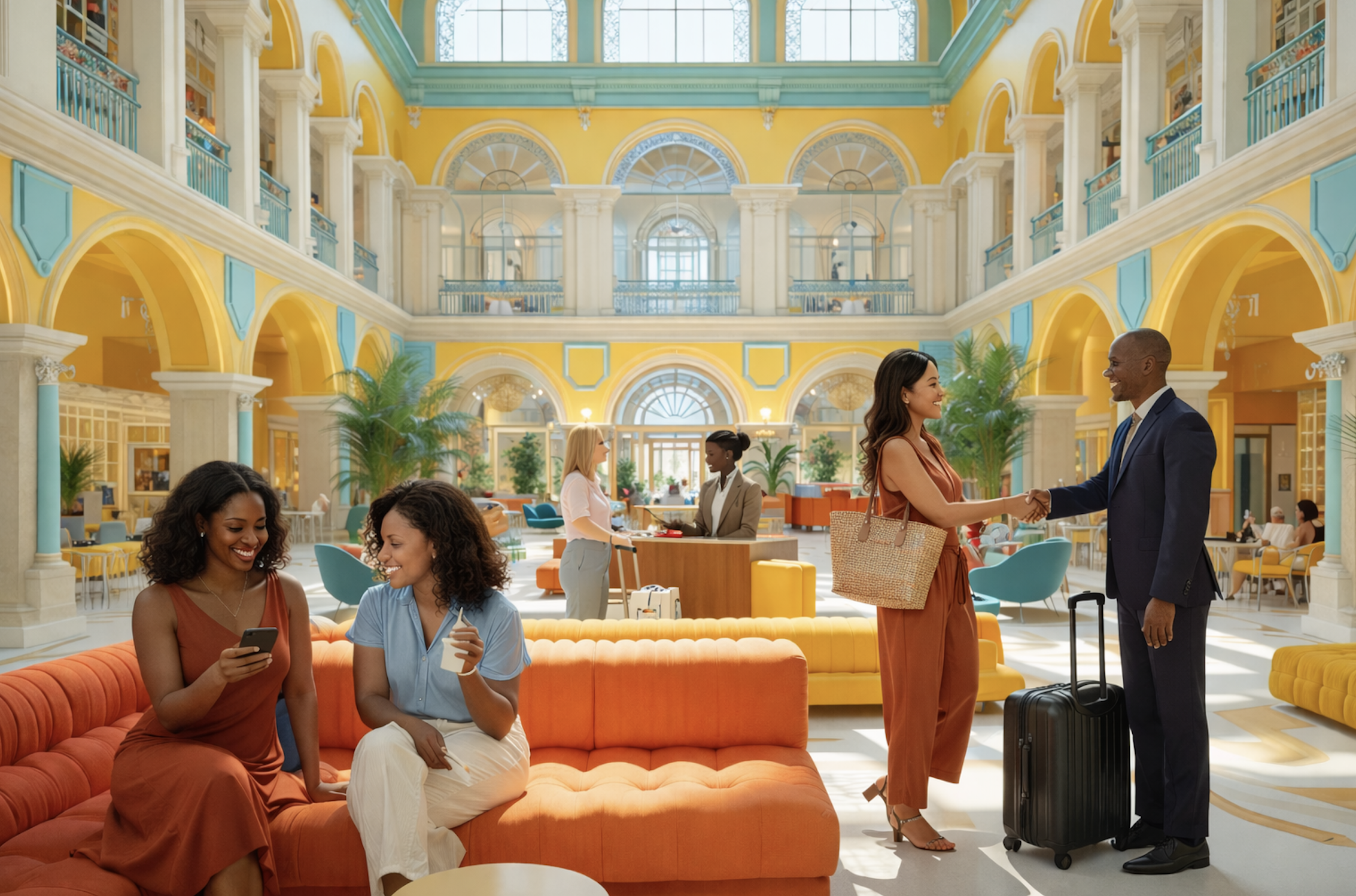
Photo Credit: Adobe Stock / Ambarwati
Skift Take
Part of the ongoing series: Culture & the Business of Luxury — exploring how global cultural shifts redefine leadership and influence in hospitality.
There are moments when popular culture does more than entertain. It signals a shift. And Bad Bunny’s Super Bowl halftime show was one of those moments.
On one of the most-watched stages in the world, he chose not to translate himself, soften his identity or universalize his message for comfort. Instead, he leaned fully into who he is — linguistically, culturally and emotionally. Spanish lyrics filled living rooms across the globe. Puerto Rican references were not explained. They were simply present. The performance did not ask for permission to belong.
And millions leaned in.
For those of us in luxury hospitality — an industry built on the promise of welcome, belonging and experience — this moment holds a powerful lesson. Inclusivity today is not about accommodation. It is about representation, confidence and emotional truth.
From Visibility to Belonging
Inclusivity is often discussed in hospitality in operational terms: multilingual staff, dietary preferences, accessibility standards, DEI policies. All essential. All necessary.
But Bad Bunny’s performance reminds us that true inclusivity begins earlier — at the level of narrative.
His show did not simply include Latin culture. It centered it. Culture was not a decorative element or a symbolic gesture. It was the core storyline. Viewers who did not understand the lyrics still understood the emotion — pride, joy, defiance, tenderness. These transcended language.
This distinction matters deeply for our industry.
In luxury hospitality, many spaces are technically inclusive yet emotionally neutral. They are beautiful, refined and flawless, yet culturally generic. They welcome everyone, yet reflect no one in particular.
In a world where travelers increasingly seek meaning over formality, neutrality is no longer a strategy. Guests are not only looking for comfort. They are looking for connection.
The Luxury of Cultural Confidence
What made the halftime show resonate was not scale or spectacle alone. It was cultural confidence.
Bad Bunny did not dilute his identity to make it palatable. He trusted that specificity would create connection. And it did.
Luxury hospitality can learn from this.
The most compelling hotels today are not those that aim to please everyone in the same way. They are rooted somewhere — in a place, in a story, in a clear point of view. When a hotel understands who it is, guests feel it immediately. When it tries to be everything, it risks becoming interchangeable.
Inclusivity does not mean erasing character. It means having the confidence to invite others into it.
For leaders in travel and hospitality — especially women shaping the next chapter of this industry — this is a critical mindset shift. We are not being asked to make our brands smaller or softer. We are being asked to make them more honest.
From the Halftime Stage to the Hotel Lobby
So what does this look like in practice?
It looks like lobbies that feel less like international airports and more like living cultural spaces.
It looks like storytelling that goes beyond local materials and into local voices.
It looks like programming that celebrates community partnerships, artists and narratives that are not reduced to aesthetic trends.
Just as Bad Bunny brought everyday Puerto Rican references onto a global stage without explanation, luxury hospitality can trust guests to engage with culture without over-curating or simplifying it.
Guests do not need culture translated into clichés. They need it presented with respect and confidence.
When culture is authentic, it elevates the experience. It does not limit it.
Inclusivity Is Emotional, Not Performative
Perhaps the most powerful takeaway from the halftime show is this: People felt something.
Not because the performance tried to be inclusive, but because it was honest.
In hospitality, inclusivity can sometimes risk becoming performative — visible in statements, invisible in experience. True inclusion, however, is felt in subtle moments: in how a space makes you feel seen, in how a narrative acknowledges your presence without announcing it.
Belonging is quiet. It does not ask for applause.
Luxury, at its best, has always understood the power of the unspoken — the discreet gesture, the intuitive detail, the atmosphere that communicates without explanation.
The same principle applies to inclusivity. When it is real, it does not need to be marketed loudly. It is simply experienced.
A New Standard for Luxury Experiences
Bad Bunny’s halftime show reminds us that the future of luxury is not defined by exclusivity alone. It is shaped by emotional resonance and cultural intelligence.
In a global industry serving a global audience, the question is no longer: How do we include everyone? The question is: Whose stories are we brave enough to tell, and how authentically are we willing to tell them?
For those of us leading in travel, this is not a marketing conversation. It is a leadership one.
Inclusive luxury is not about removing edges. It is about holding space for depth. It is about allowing identity, heritage and perspective to exist confidently within refined environments.
This is where leadership matters.
We are being called to design spaces that are not only beautiful, but meaningful. Not only profitable, but principled. Not only global, but grounded.
Luxury hospitality does not need to abandon sophistication to become inclusive. It needs to embrace clarity of identity and trust that culture, when honored honestly, strengthens brand value rather than dilutes it.
Because when people feel represented, they do not just visit.
They connect.
They remember.
They return.
They belong.