
Leaders to Know: Analia Capurro on Leading with Empathy and Cultural Connection in Mexico City
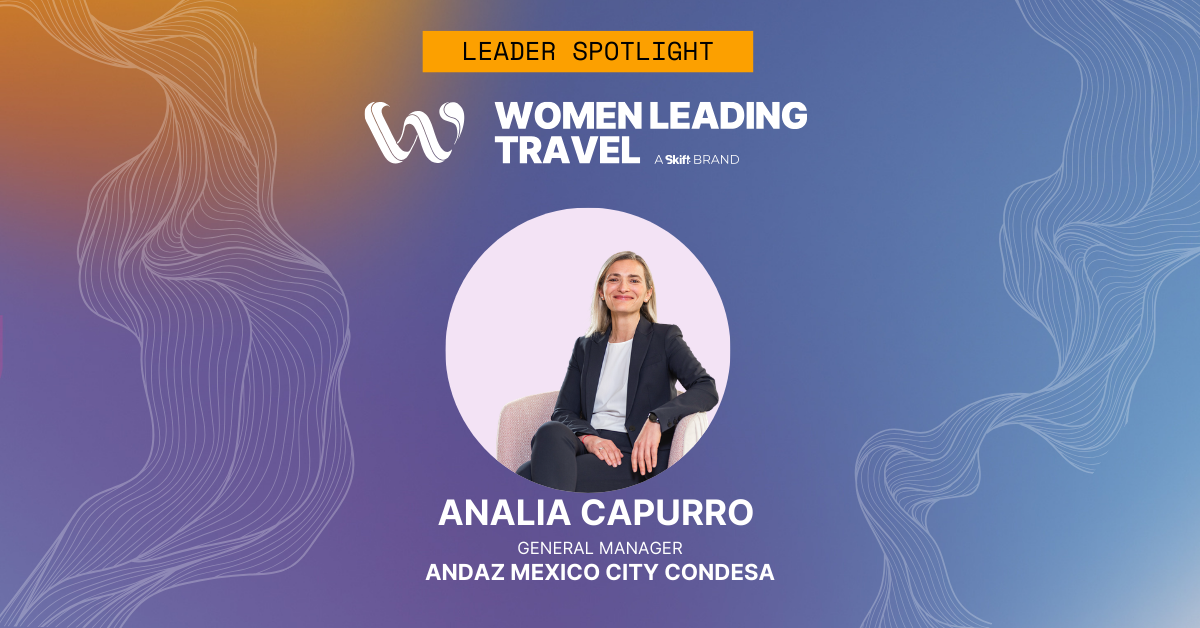
Each year, International Women’s History Month offers a global moment to recognize women who are reshaping industries, expanding leadership pathways and creating space for the next generation to rise. Across travel and hospitality, leaders like Analia Capurro are helping redefine what modern leadership looks like — blending cultural awareness, strategic vision, and a deep connection to community.
Capurro, General Manager of Andaz Mexico City Condesa and a Hyatt veteran of nearly two decades, leads in one of Latin America’s most dynamic travel markets. In Mexico City’s creative Condesa neighborhood, her leadership approach reflects the balance many hospitality executives are navigating today: delivering global brand standards while remaining deeply rooted in the local culture that travelers increasingly seek.
“Leadership in Mexico City today calls for agility, cultural awareness, and a genuine connection to the community,” Capurro says. “In a vibrant neighborhood like Condesa, it’s about balancing global standards with authentic local stories.”
Hospitality as a Cultural Connector
Capurro’s path into hospitality was shaped by the industry’s ability to bring people together and shift perspectives across cultures. Over nearly two decades with Hyatt, she has seen firsthand how travel can shape the way guests understand a destination.
“Travel has a unique way of bridging cultures,” she says. “Seeing how a hotel can shape a guest’s entire view of a city is what drew me to leadership in this field.”
Today, that perspective guides how she approaches her role — not only overseeing operations but shaping how the property connects guests with the broader cultural fabric of Mexico City.
Leading with Vision — and Trust
As Capurro’s leadership responsibilities evolve, she is increasingly focused on big-picture strategy while empowering her team to take ownership of day-to-day operations.
“I’m allowing my team to lead more of our operational details,” she explains. “That allows me to focus on the bigger vision — how we position our brand, support the community and nurture our talent.”
At the same time, she remains closely connected to the guest experience, which she views as the foundation for every leadership decision in hospitality.
The Representation Gap Still Facing Women Leaders
Despite hospitality employing large numbers of women globally, representation at the highest executive levels remains uneven — a reality Capurro sees across Latin America.
“Representation at the highest executive levels remains a challenge,” she says. “While hospitality employs many women, fewer hold top decision-making roles. We need more visible pathways to executive leadership and stronger mentorship networks across Latin America.”
When she finds herself among the few women in the room, Capurro views it as both an opportunity and a responsibility.
“Every time we contribute with confidence and purpose, we help normalize women’s authority in those spaces,” she says.
The Leadership Skill That Matters Most
For Capurro, the leadership quality that has shaped her career most profoundly is empathy.
“In hospitality, understanding both your team and your guests is essential,” she says. “Empathy builds trust, and trust builds exceptional experiences.”
That philosophy also shapes how she defines progress within the travel industry — not as rapid change for its own sake, but as thoughtful evolution that respects the spirit of a destination.
“Progress is about discovering new ways to inspire both our guests and our team while staying true to the destination.”
The Rise of Cultural Travel in Latin America
One of the most significant shifts Capurro is watching across Latin America is the growing demand for immersive, culturally rich travel experiences.
Travelers today increasingly want to go beyond sightseeing, seeking deeper engagement with destinations through food, art, architecture and local traditions. For hotels, this creates a powerful opportunity to serve as cultural gateways.
“In places like Mexico City, hotels can become gateways to the city’s culture and stories,” she says.
A Defining Leadership Lesson
One pivotal moment in Capurro’s career came when a general manager encouraged her to take on responsibility for food and beverage operations — an area where she initially felt underprepared.
His advice stayed with her.
“When you reach a certain level, being a good leader is what really counts,” he told her. “Surround yourself with the right people and motivate them to do their best.”
The experience reinforced a lesson Capurro often shares with other women in the industry.
“Women tend to want to be 100% prepared before taking a chance,” she says. “But that’s unrealistic. Trust yourself and your abilities.”
Leadership Rooted in Community
For Capurro, hospitality leadership is inseparable from community.
“A hotel isn’t just a building,” she says. “It’s part of a neighborhood, a team and a broader cultural fabric.”
At Andaz Mexico City Condesa, that philosophy shapes everything from design and programming to the way the team interacts with guests and local partners.
“When the community thrives, the business thrives too.”
Building Networks for Women Leaders in LATAM
Capurro also sees growing momentum among women leaders across Mexico and Latin America who are eager to connect, collaborate and support one another’s growth.
“What excites me most is the resilience and creativity I see in women leaders across the region,” she says.
She believes organizations like Women Leading Travel can help amplify those voices and expand cross-border leadership networks across the region.
“There are so many incredibly talented women in Latin America doing incredible work,” she says. “Creating a space where those leaders can share experiences and open doors across borders would be incredibly powerful.”
Because ultimately, representation does more than reflect progress — it helps create possibility.
“When we see each other leading,” Capurro says, “it makes that path feel more possible for the next generation.”